Research Note No. 3
Does the 1% rule work for rental property in Washington?
Short answer
Rarely, and it was never meant to carry a decision. In most Washington markets, especially around Puget Sound, few listings reach monthly rent of 1 percent of the price, and the rule ignores property tax, insurance, owner-paid utilities, reserves and the loan. A quick cash flow screen that uses real local costs and your actual financing is a better first filter.

1. What the 1% rule says and where it came from
The rule is one sentence long. A rental is worth a closer look if its monthly rent is at least 1 percent of the purchase price.
It spread through investing books and forums as a way to sort a hundred listings down to five without opening a spreadsheet, and you can run it in your head while scrolling.
It also assumes rent is high relative to price, which tends to hold where houses are inexpensive. Much of Washington is the opposite.
2. Running it on a Tacoma, Kent or Spokane listing
The arithmetic is simple. A house listed at $500,000 would need $5,000 a month in rent to pass. A duplex at $700,000 would need $7,000 a month across both units. (These are round illustrative figures, not quotes for any real property.)
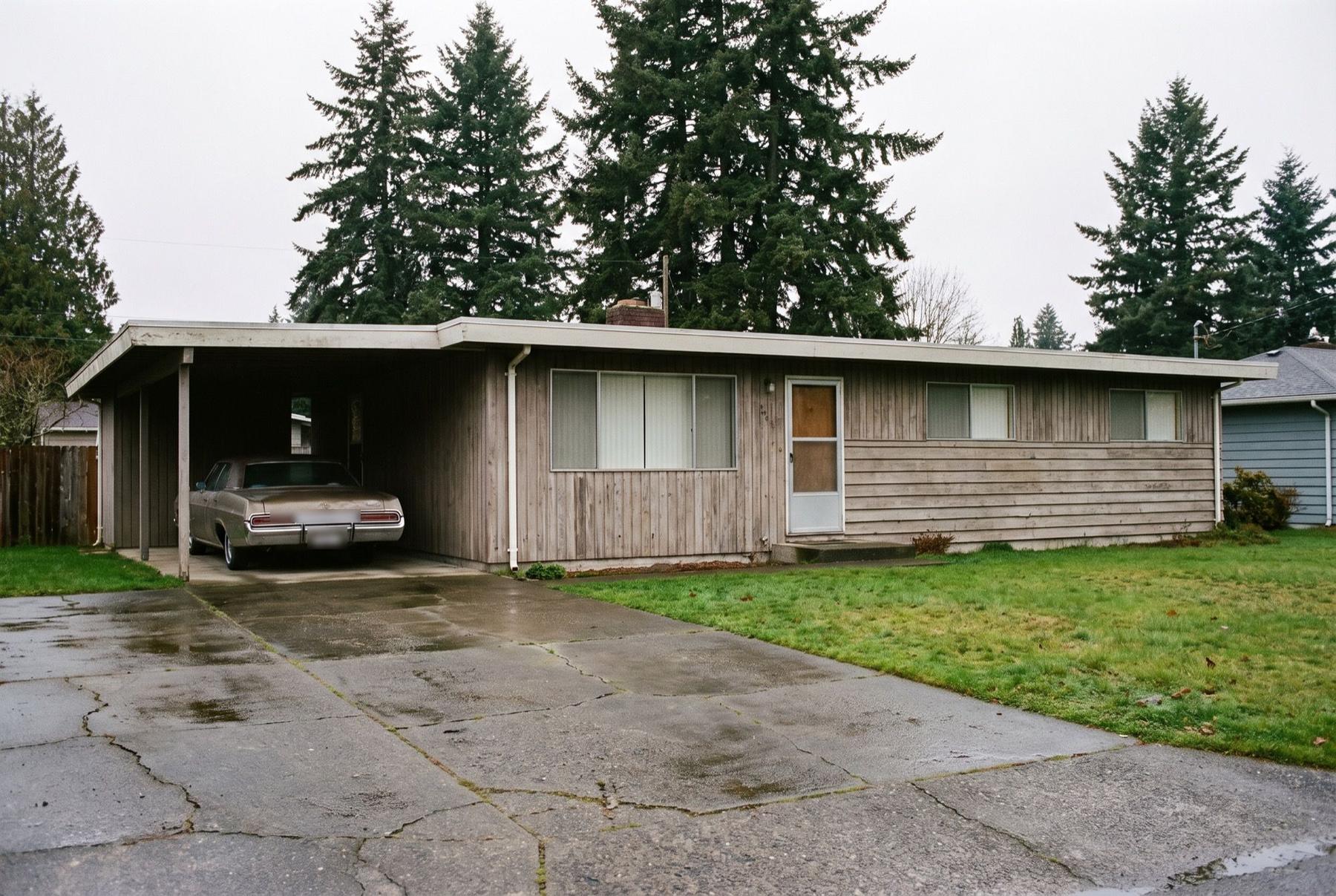
Try that on the kind of listing a first-time investor tends to look at: a 1960s rambler on Kent’s East Hill, a converted duplex in South Tacoma, a newer townhouse in Auburn. The rent usually falls well short of the line. Spokane and the Tri-Cities sometimes get closer, because prices there sit lower relative to rents, but a clean pass is still the exception.
If nothing you run on Puget Sound listings passes, your search is fine. The rule was built for cheaper markets, and the useful question is what to use in its place.
3. What the rule leaves out
Even where it passes, the rule is silent on the costs that decide if a rental pays you or you pay it. Several of them are specific to Washington.
| Cost | Why it matters in Washington |
|---|---|
| Property tax | Set by county and levy district. Pull the figure from the Pierce, King, Spokane or Benton County assessor, and check for exemptions that end at sale. |
| Landlord insurance | A different policy from a homeowner’s, usually priced higher, and older houses cost more to insure. |
| Owner-paid utilities | Water, sewer and garbage are often billed to the owner on duplexes and larger buildings. |
| Vacancy | One empty month on a single-family rental is a meaningful share of the year. |
| Repairs and capital reserves | Roofs and side sewers in older Tacoma and Spokane housing. Air conditioning in Kennewick. |
| Management | Budget for it even if you plan to self-manage. |
| The loan | The biggest line for most buyers, and the rule ignores it entirely. |
The last row is the one that does the most damage. Two identical houses at the same price and rent can produce very different cash flow depending on the down payment and the interest rate. A screen that cannot see the loan cannot tell you whether the property works for you.
There is a second gap on the income side. The 1% rule uses whatever rent you type in, usually the asking rent from the listing. If the property has tenants, the rent you can actually collect for the first year is often what they pay today, and Washington’s rent cap and notice periods control how fast that changes. The rules on raising rent after you buy are worth reading before you trust a listing’s income figure.
4. The 50% rule and other shortcuts, and where they break
The 1% rule has cousins. Each is useful for about as long as it takes to read it.
The 50% rule assumes operating expenses, everything except the mortgage, will run about half of gross rent. On a single-family house where the tenant pays the utilities and mows the lawn, half is often too high. On an older fourplex with owner-paid water and sewer and a boiler in the basement, it can be too low.
The 2% rule is the 1% rule with a higher bar, which makes it even less relevant here.
The gross rent multiplier, price divided by annual rent, is a better comparison tool between similar buildings on the same street. It still ignores expenses and the loan.
All of them are ratios of price to rent, and the result you care about is cash flow after every cost. The method page on how we analyze a rental defines each of those costs and walks through an illustrative example line by line.
5. When a property that misses the rule can still work
Failing the 1% rule does not make a property a bad purchase. Four situations change the math enough to matter.
Living in one unit. Buying a duplex, triplex or fourplex and living in one unit opens owner-occupied financing, often with a smaller down payment than an investor loan. The rent from the other units offsets your housing cost. Judge it against what you would pay to live somewhere else, which is a different test from pure investment return.
An ADU, existing or planned. A permitted accessory unit adds a second rent to a single-family lot. Washington’s 2023 ADU law widened where they are allowed. A planned ADU is a construction project with its own costs and timeline, and it belongs in the analysis as one.
A long hold with a real down payment. Some investors accept thin or even negative cash flow for a few years in exchange for loan paydown and the possibility of appreciation. That is a legitimate choice if you can carry it comfortably and understand that appreciation is never certain. How you eventually sell matters too, and what taxes apply when you sell a Washington rental belongs in that plan from the start.
A lot that allows more units. Washington’s 2023 middle housing law opened many city lots to duplexes and fourplexes. An older rambler on a large lot may be worth analyzing twice: once as a rental, once as a site. The second analysis needs real construction numbers.
6. A better first screen before a full analysis
You still need something quick. The screen I would rather see a first-time investor use takes maybe twenty minutes a property:
- Estimate rent from signed leases on comparable units nearby, adjusting for differences like parking and laundry. If there are tenants, use what they pay now.
- Take the actual property tax from the county assessor’s website.
- Get a rough landlord insurance figure from an agent, for this building’s age and type.
- Add any utilities the owner will pay.
- Subtract a vacancy allowance, a repair allowance, a separate capital reserve and a management fee, as percentages of rent. Use higher figures for older buildings.
- Subtract the mortgage payment at the down payment you plan and a rate from your lender.
What is left is a monthly cash flow estimate. If it is clearly negative and you are not living there, the property probably fails, and you found out in twenty minutes. If it is positive or close, run the sensitivity: drop the rent a little and raise the rate a little. A property that survives that deserves a full analysis before an offer.
No screen guarantees a result. This one at least uses the costs a Washington owner actually pays, which the 1% rule was never designed to do.
A note from Austin
Pick the one or two listings in Tacoma, Kent or Spokane you keep coming back to and send them over, or call me at 206.940.0942. I will run them with the real tax, insurance and financing figures, tell you which one, if either, holds up, and point to the line that decides it.
Request an analysisAustin.Hellickson@homexa.com
Austin HellicksonManaging Broker, LPT Realty