Guidance note
Buying a rental property in Washington.
Building types, the 2023 middle housing law, ADU rules, and the landlord-tenant basics a first-time owner should understand before closing.
- Covers
- Single-family houses through fourplexes, accessory dwelling units, condominiums
- Law referenced
- HB 1110 (2023) · HB 1337 (2023) · Residential Landlord-Tenant Act, RCW 59.18
- Prepared by
- Austin Hellickson, Managing Broker, LPT Realty
1. Choosing a building type
Single-family houses
The simplest rental to own and to finance. Tenants often pay their own utilities and look after the yard, and a house tends to attract households that stay put. The weakness is concentration: when the one unit is empty, the property earns nothing. Resale is easier than with most rentals, because your eventual buyer pool includes people who want to live there as well as investors.
Duplexes
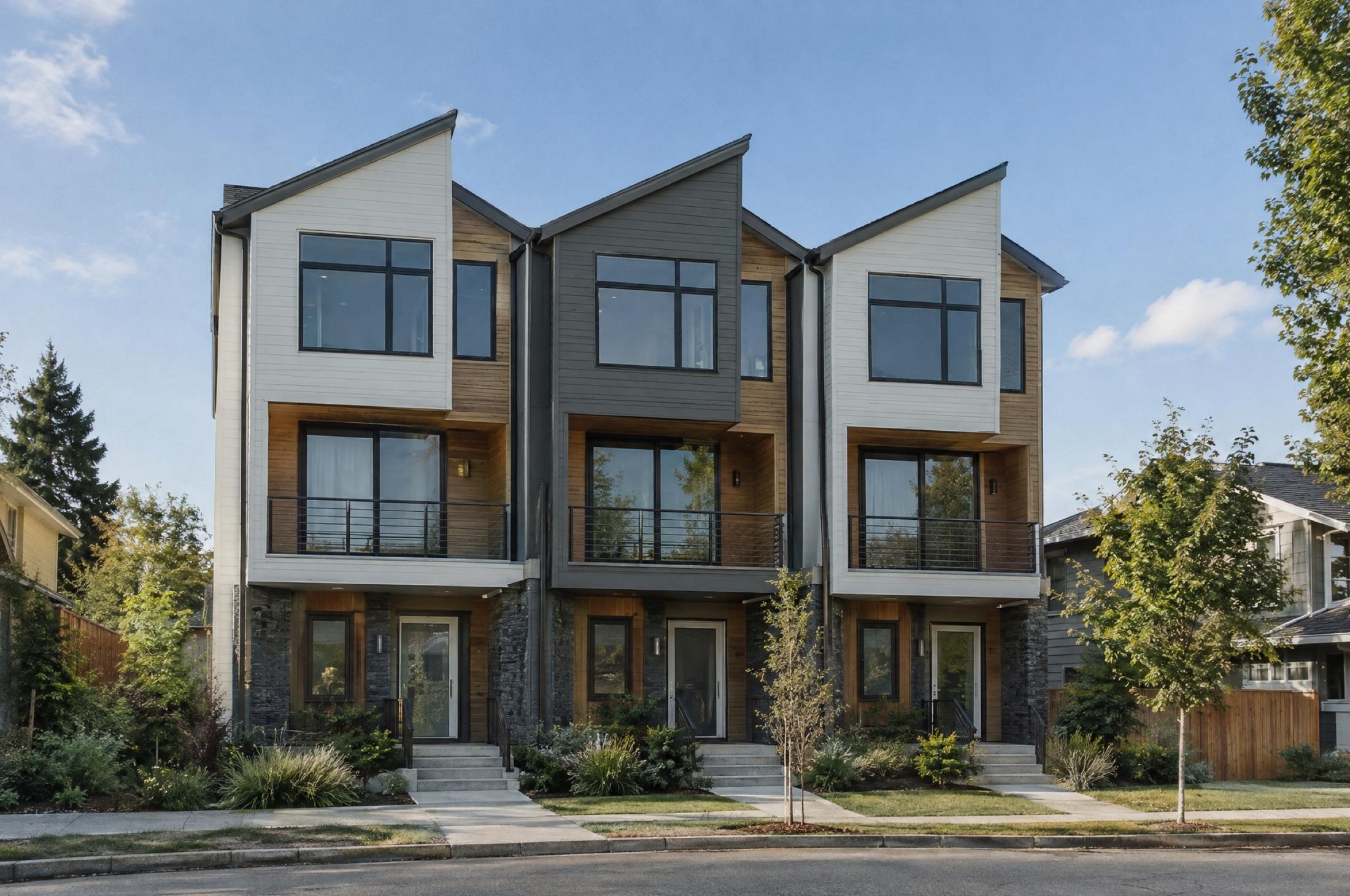
Two units on one lot, side by side or stacked. A duplex spreads vacancy across two leases and can cost less per unit than two separate houses. It is also the classic first purchase for someone who plans to live in one side, because owner-occupied financing is available on buildings of up to four units. Living in one side also means your tenant lives on the other side of the wall.
Triplexes and fourplexes
Still residential property in the eyes of most lenders, so long-term fixed-rate loans are available. At five units and up, a building is generally financed as commercial property, with different terms and a different kind of underwriting. Three and four unit buildings often come with owner-paid water, sewer and garbage, a shared laundry room, and mechanicals of uncertain age. Budget for all of it. Owner-occupied FHA loans on three and four unit buildings add a test that the rents cover the payment; your lender can walk through it.
Accessory dwelling units
An ADU is a second, smaller home on the same lot as a house, either built into it, as with a basement or garage conversion, or standing on its own in the backyard. Buying a house with an existing, permitted ADU is one of the more practical ways to collect two rents from a single-family lot.
Adding one after purchase can work, but construction costs and permit timelines vary widely, and the analysis should treat a planned ADU as its own project with its own numbers. Small details decide how rentable the unit is, such as separate utility connections and a path to the door that does not cross the main tenant’s patio.
Condominiums and HOA townhouses
Read the association documents before you count on renting a condo. Many associations limit how many units may be rented at once or set minimum lease terms, and some ban short-term rentals outright. Dues rise over time, and a special assessment for siding or a roof can absorb years of cash flow in one letter.

2. What HB 1110 changed
HB 1110, signed in 2023, requires many Washington cities to allow more than one home on lots that used to be zoned for a single house. In general terms, cities with at least 25,000 residents must allow at least two units per residential lot, and cities with at least 75,000 residents must allow at least four, with higher allowances near major transit stops and where affordable units are included. Cities were given deadlines tied to their comprehensive plan updates, so the new rules arrived at different times in different places.
For a rental buyer, the practical effect is that some single-family lots in cities such as Tacoma, Spokane, Kent, Auburn and Kennewick may now allow a duplex, triplex or fourplex that was not possible a few years ago. Tacoma rewrote its residential zones through its Home in Tacoma project, and other cities made changes of their own. Whether a particular lot can take more units depends on the adopted code, the lot’s size and shape, setbacks, parking, sewer and water capacity, and critical areas such as steep slopes or wetlands.
A zoning change makes more units legal. Whether they pencil out is a separate question. Adding units means construction cost, permit and connection fees, financing for the build, and months with the new units earning nothing. The analysis treats a redevelopment plan as its own project and tests whether the added rent justifies the added cost and risk.
3. ADU rules and HB 1337
HB 1337, also passed in 2023, set statewide minimums for accessory dwelling units in cities and counties planning under the Growth Management Act. Among other things, it requires allowing two ADUs per lot within urban growth areas and limits owner-occupancy requirements. Inside those minimums, cities still set size limits, height, setbacks, design standards, parking and fees, and they differ from one city to the next.
Before paying for a property on the strength of its ADU, confirm four things: that the existing unit was permitted, how utilities are metered and billed, that the lot has the room and access a detached unit needs, and what the city charges in impact and connection fees. A permit history request to the city usually answers the first question in writing.
4. Landlord-tenant law, in general terms
Most residential rentals in Washington are governed by the Residential Landlord-Tenant Act, chapter 59.18 of the Revised Code of Washington. What follows is a broker’s summary to help you ask better questions. For the details that apply to a specific property, talk to a landlord-tenant attorney or a landlord association before you close.
Tenants in place
Buying an occupied property means inheriting its leases. Review every lease and deposit record during your inspection period and compare them with the rent roll. The purchase agreement should say how deposits and prorated rent transfer at closing.
Ending a tenancy
Since 2021, Washington law has limited the reasons a landlord may use to end most tenancies to a list set out in the statute. A sale does not end an existing lease, and the grounds that might apply to a new owner, such as moving into a unit, come with their own notice periods and conditions. Plan on the current tenants staying, analyze the property at its current rents, and get an attorney’s advice before relying on any ground to end a tenancy.
Rent increases
State law requires advance written notice before a rent increase, and a 2025 law limits annual increases on most residential units, with exemptions that include newer buildings. The allowed maximum is recalculated each year. Check the current figure before you model any increase.
Deposits and move-in
A landlord who collects a deposit must give the tenant a written checklist describing the unit’s condition at move-in. Keep it, with dated photographs. It is the document that matters most when the tenant moves out.
City rules and fair housing
Several cities add their own requirements to state law. Tacoma has its own Rental Housing Code, for example, so read the city’s rules as well as the state’s. Federal and Washington fair housing laws apply to every rental, and Washington’s protections are broader than federal law. They include source of income, which means a tenant cannot be turned away because part of the rent comes from a housing voucher.
5. Financing, briefly
I am not a lender, and nothing here is loan advice. A few general points help a first-time buyer have a more useful conversation with one. Owner-occupied loans on one to four units usually allow a smaller down payment than investor loans, and investor loans often carry a higher rate. Many lenders will count part of the expected rent from the other units when you qualify. Some investors use loans qualified mainly on the property’s rent, with little or no review of personal income. These are often called DSCR loans, and they come with their own terms. Get a lender’s written estimate early, and I will put its numbers into the analysis.
6. Questions buyers ask
Can a broker promise a return on a rental property?
No. Rent, vacancy, repair costs, interest rates and property values all change, and no broker or spreadsheet can promise a result. What an analysis can do is show whether a property works under conservative assumptions and how much room there is for things to go wrong.
Can I buy a duplex, live in one unit and rent the other?
Yes. Owner-occupied financing is available on buildings of up to four units, usually with a smaller down payment than an investor loan. The lender will require you to actually live there, typically moving in within a set period after closing and staying for a set period after that. Your lender will explain the specifics.
What is the difference between cap rate and cash on cash return?
Cap rate is net operating income divided by purchase price, and it ignores financing. Cash on cash return is annual cash flow after mortgage payments divided by the cash you actually put in. Cap rate compares buildings. Cash on cash measures your own money.
Does HB 1110 mean I can build a fourplex on any lot?
No. HB 1110 requires many cities to allow more units on residential lots, but each city adopted its own code, and a specific lot is still subject to lot size, setbacks, parking, utilities and environmental rules. Read the adopted code and talk with the city’s permit staff before buying a lot for a project.
Can I add an ADU to a house I buy in Washington?
Often, yes. HB 1337, a 2023 state law, requires cities and counties planning under the Growth Management Act to allow two accessory dwelling units per lot within urban growth areas, but size limits, setbacks, fees and permitting still differ by city. Confirm what the city allows on that lot, and what it will cost, before counting ADU rent in an analysis.
Is a fourplex residential or commercial property?
For most lenders, buildings of one to four units are residential, so conventional and owner-occupied loan programs apply. Buildings of five or more units are generally financed as commercial property, with different terms.
Do I need a property manager for one rental?
No. Many owners of a single rental manage it themselves. The analysis still includes a management cost so the property works either way. A manager is worth serious thought when you live far from the property, such as a Tacoma owner with a rental in Spokane or Kennewick.
What should I check before buying a rental that already has tenants?
Get every lease, the rent roll, the security deposit records and any written notices given to tenants, and confirm how deposits transfer at closing. A sale does not end an existing lease, and Washington limits the reasons a landlord may use to end a tenancy, so plan on the tenants staying and analyze the building at its current rents.
Tell me the building type or the city you have in mind, and I will start there.
If you already have an address, I will run the full analysis. If you are earlier than that, I can tell you which building types make sense at your budget, and which parts of Tacoma, Kent, Auburn, Spokane or the Tri-Cities are worth your weekend.
Request an analysis206.940.0942Austin.Hellickson@homexa.com
Austin HellicksonManaging Broker, LPT Realty