Research Note No. 1
What do Tacoma’s 2026 landlord rules mean for a rental you are about to buy?
Short answer
In Tacoma you need a current city business license in the owner of record’s name before you can raise rent or pursue an eviction, and since January 1, 2026 a rent increase requires 180 days’ notice on the city’s form. An increase of 5 percent or more can trigger relocation assistance if the tenant chooses to move instead of paying it. For a buyer, that means underwriting the first year at today’s rent and treating any large increase as a cost.

1. Why Tacoma’s rules matter before you make an offer
Every rental in Washington answers to the Residential Landlord-Tenant Act, chapter 59.18 of the RCW. Tacoma adds a second layer on top of it, and the city rewrote much of that layer with an ordinance adopted in December 2025 that took effect on January 1, 2026. If you last read Tacoma’s landlord rules a couple of years ago, read them again.
For a buyer, these rules are inputs to the purchase price. They set how quickly rent can move after you close and what it costs when a tenant leaves over an increase. They even limit which months of the year you can turn a unit over.
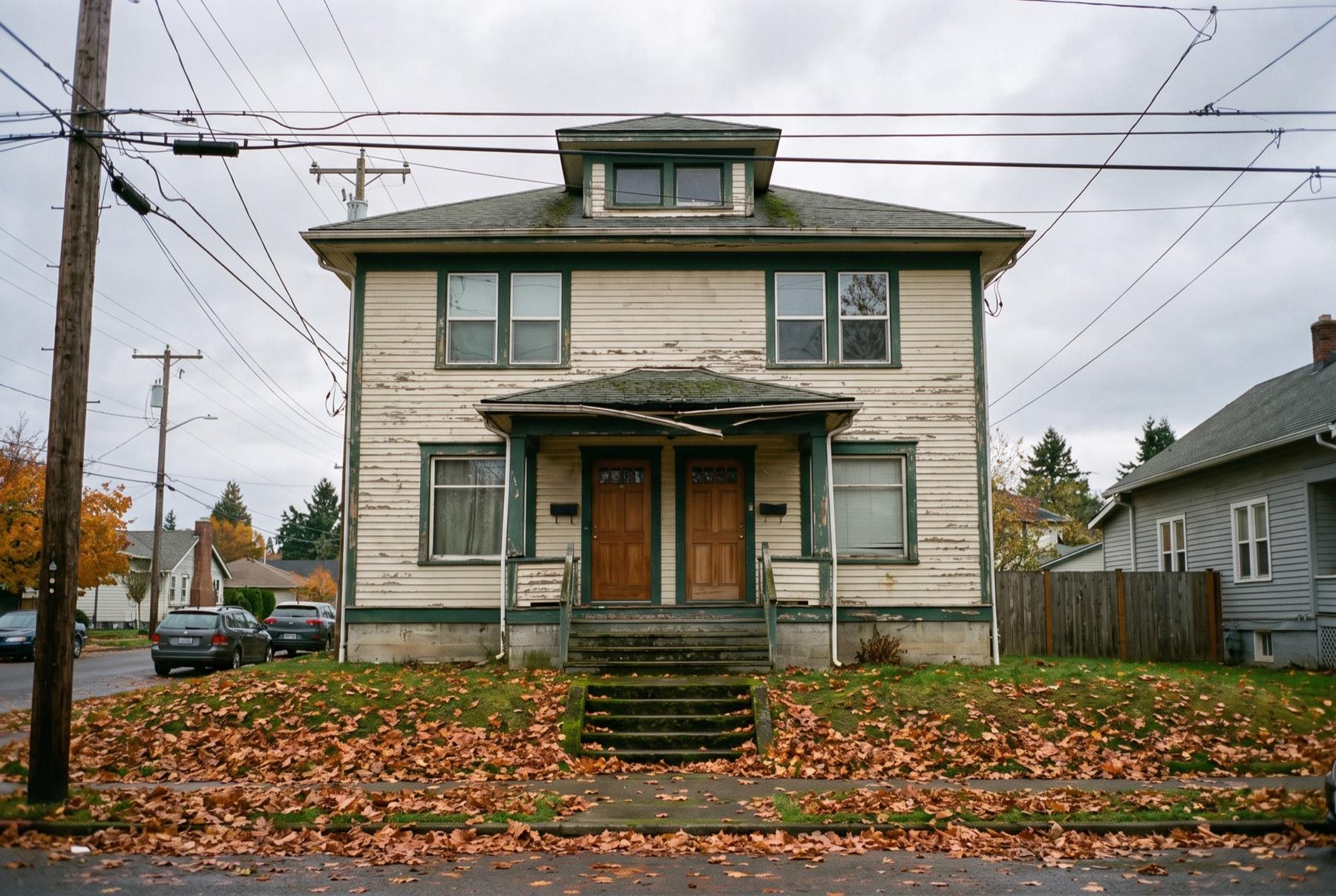
Much of the city’s small rental stock is early twentieth century housing in the North End, Hilltop, the Stadium District and South Tacoma, and plenty of those houses were split into two units decades ago, with two front doors on one porch and one aging side sewer between them. Buildings like that usually come with tenants in place, and every rule below applies to those tenants the day you take title.
2. The business license comes first
Under Tacoma’s rules, a landlord cannot raise the rent or pursue an eviction without a current City of Tacoma business license, and the license has to be in the name of the owner of record. It is the easiest rule to overlook in a purchase, because the seller’s license ends with their ownership.
- Put the license on your closing checklist, next to the insurance binder. Apply in the name that will appear on the deed.
- If you are buying through an LLC, the LLC is the owner of record, so the license goes in the LLC’s name.
- Ask the seller for a copy of their current license. If it lapsed at some point, ask a landlord-tenant attorney whether that affects any past rent increase before you rely on the rent roll.
The license has to exist before your first rent increase notice goes out, so apply the week you close.
3. How much notice Tacoma requires before a rent increase
Statewide, Washington requires 90 days’ written notice of a rent increase. Tacoma requires more. As of January 1, 2026, a Tacoma landlord must give 180 days’ notice, on the city’s form, and the notice has to describe the city’s relocation assistance program.
State law stretches the timeline further. Washington caps annual increases (the cap is recalculated by the Department of Commerce each year) and bars any increase during the first 12 months of a tenancy. A sale does not start a new tenancy. So the earliest date a new rent can take effect depends on when the current tenant moved in, when the seller last raised the rent, and when your 180 days run out.
For most purchases, plan on collecting the rent the tenant pays today for the first several months of ownership, and often for most of the first year. I go through the statewide side of this, including which small buildings are exempt from the cap, in the article on raising rent after you buy a Washington rental.
4. When a Tacoma landlord owes relocation assistance
Tacoma’s Landlord Fairness Code, chapter 1.100 of the Tacoma Municipal Code, requires relocation assistance when a tenant who gets notice of a rent increase of 5 percent or more within 12 months decides to move rather than pay it. The amount is a multiple of the monthly rent, and it grows with the size of the increase: two months’ rent at 5 percent or more, two and a half months’ above 7.5 percent, and three months’ above 10 percent. The code exempts a landlord who lives on the same site when the site has four or fewer units. The December 2025 ordinance set these amounts, so confirm them with the city’s Housing Division before you put a figure in a spreadsheet.
For a buyer, this turns the phrase “rents are below market” into a decision with a price on each side. You can raise rents gradually, below the trigger, and accept a slower climb. Or you can raise them further and plan for the possibility that the tenant leaves and you owe assistance, on top of the empty weeks and make-ready work that follow any move-out.
The mistake is a purchase price that assumes a quick jump to market rent with no cost attached.
5. Screening limits, late fees and the Renting in Tacoma handbook
Screening. Tacoma caps the ratio of income to rent a landlord can require of an applicant, and the allowed multiple depends on how the unit’s rent compares with the federal Fair Market Rent figure. A manager working from a statewide template will miss that, so ask to see screening criteria written for Tacoma.
Late fees. Tacoma caps late fees at 1.5 percent of the unpaid monthly rent. If a seller’s operating statement shows late fee income, leave it out of your projection.
The handbook. Landlords must give tenants the city’s Renting in Tacoma handbook. When you take over existing tenancies, ask whether the seller provided it, and plan to provide the current version yourself.
6. Winter and school-year limits on ending a tenancy
Washington already requires a listed cause to end most tenancies, and Tacoma adds limits on timing: it restricts certain evictions during the winter months and gives some households with children in school a defense during the school year. Some small landlords are exempt from parts of these rules, and qualifying turns on details worth confirming with an attorney.
This matters most when your plan depends on a unit being empty. If you intend to live in one side of a duplex, or to renovate a unit before re-renting it, do not assume you can create that vacancy after closing. The cleaner route is to negotiate for the unit to be delivered vacant at closing, with the seller handling the notice under their ownership and the timing written into the purchase agreement.
7. Putting Tacoma’s rules into the purchase analysis
When I analyze a Tacoma rental for a buyer, each rule lands on a specific line.
| Tacoma rule | What it changes in the analysis |
|---|---|
| Business license in the owner’s name | A closing task and a small recurring cost. No increase until it is in place. |
| 180-day notice, plus the state cap and 12-month rule | Year one is modeled at current rent. Increases start later than most buyers expect. |
| Relocation assistance at 5 percent or more | A large increase is modeled with a possible payment and a turnover. |
| Late fee cap | Late fees are left out of income. |
| Winter and school-year limits | Turnover timing is conservative. Vacant units are negotiated at purchase. |
| Screening income cap | Management criteria are checked for Tacoma. |
Before an offer, or at the latest before your inspection and review period ends, ask the seller for the current leases and any amendments, a rent ledger, copies of every rent increase notice they have sent, their business license and any correspondence with the city. A missing notice or a lapsed license is far easier to deal with before you sign than after.
Tacoma is one of five markets I describe on the Washington rental markets page, with notes on the neighborhoods and building types that come up most. If you are comparing Tacoma with Kent, Spokane or the Tri-Cities, licensing works differently in each, and the city-by-city rental license rundown lays it out.
Tacoma has amended these rules more than once, and this summary is general information for buyers. Check the Housing Division’s current materials, and have a Washington landlord-tenant attorney confirm anything your purchase depends on.
A note from Austin
Send me the address of the Tacoma duplex or tenant-occupied house you are weighing, along with whatever the seller has shared about the leases. I will run it at the rent the tenants pay today, map what the 180-day notice and the relocation rules do to the first two years, and tell you whether the price still makes sense. My number is 206.940.0942.
Request an analysisAustin.Hellickson@homexa.com
Austin HellicksonManaging Broker, LPT Realty